SoHE Graduate Student Spotlight
Lars Shimabukuro Interviewed By and Featured in Madison Magazine
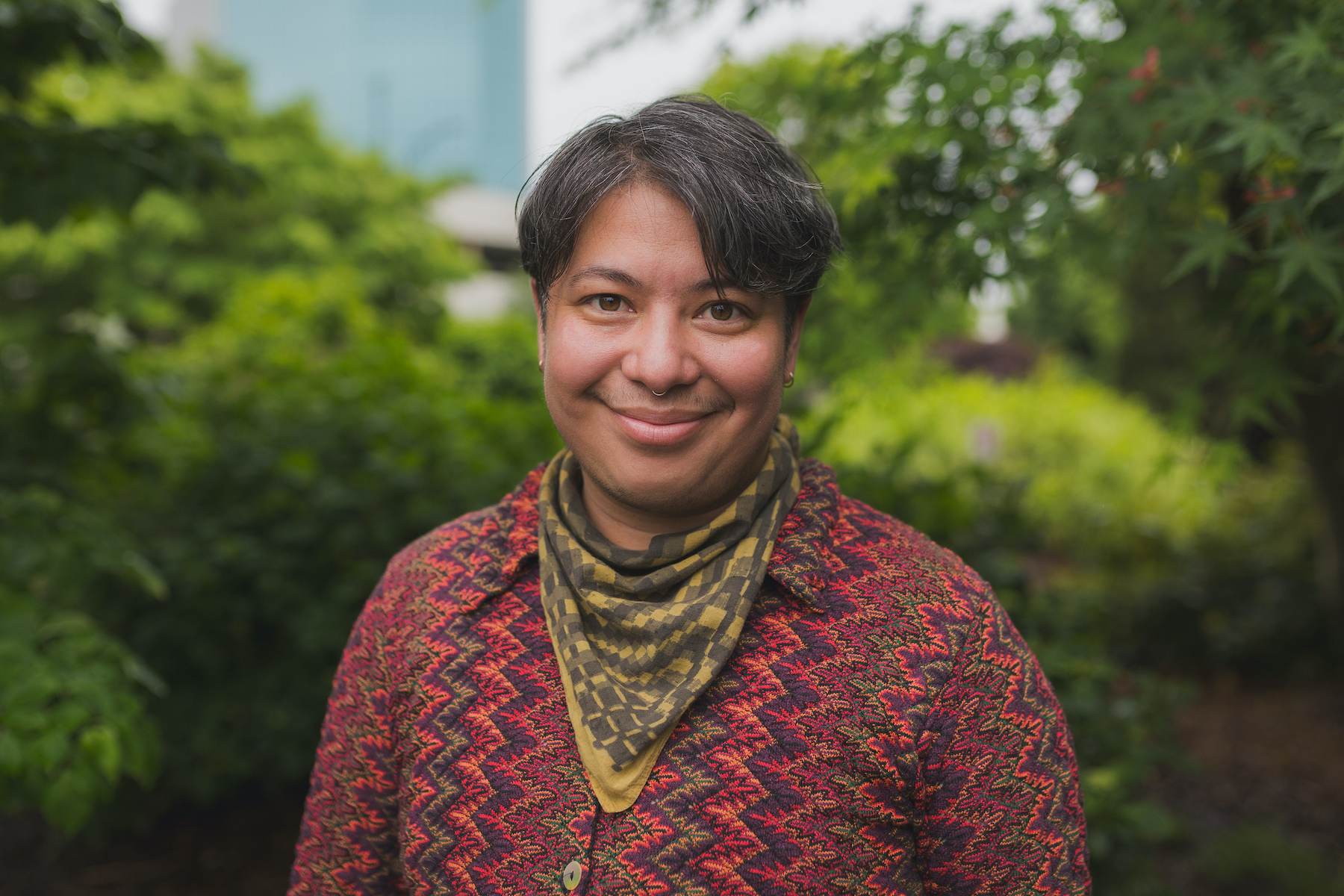
Lars Shimabukuro, an MFA student in the Design Studies (DS) graduate program, has recently been interviewed by and featured in the latest issue of Madison Magazine. This issue of Madison Magazine highlights the local fiber arts community.
What work did you complete to achieve this accomplishment?
I have been working in community arts programs since high school, and textiles have been the focus of my career since 2017.
What does this accomplishment mean to you for your scholarly career?
As I work on applications for teaching positions after my anticipated graduation next spring, it means a lot to have my artistic practice supported in this way.
What does this accomplishment mean to you personally?
I am honored to be included within an issue that is highlighting the incredible fiber arts community within Madison. Artists and designers are required to travel a lot for our careers, and finding a fiber community wherever I am has been a great way to ground to a new environment. Through teaching I am consistently surprised by how students take to certain processes, but I think we all have an innate connection to fiber because its material history is inextricable from ours.
What drew you to your specific area of study, and why is it meaningful to you?
I went to Yale University as a first generation college student, and although they didn’t have fibers classes in the art department, the basement of my dorm had looms and a volunteer on Sundays that allowed me to fall in love with weaving. I was studying printmaking and sculpture at the time, but it was within weaving that I felt like everything fell into place for me.
My work is deeply influenced by my personal history, translated through the traditional craft traditions of Japan, Hawai’i, and Appalachia. I believe these technical skills can serve as more than just artistic tools; they provide a space for students to explore their own identities and histories within their creative work.
What impact do you hope your research will have on your field, community, or the world?
I see art and craft as a vital space for bodily autonomy, community growth, and the safe exploration of risk, values that I center in the classroom. These skills can be applied to any discipline, as creativity and critical thinking affect all areas of our lives. I take teaching very seriously, viewing the act of learning a new skill as a deeply vulnerable process.
Have you received any grants, fellowships, scholarships, or awards during your time here? If so, how did these opportunities support your research or professional development?
Yes, I have felt incredibly supported by the School of Human Ecology and the broader UW Madison community!
My first year, I was awarded the Equity and Justice Network Fellowship, allowing me the space to work in the Helen Louis Allen Textile Collection, and take Japanese language classes. I also greatly appreciate the Design Studies scholarships that help support my research and exhibition opportunities, the SoHE Summer Time Academic Research Award, which allowed me to study in Japan in the summer of 2025, and Schurch Thomson Graduate Research Excellence Award, which validates my work throughout the program.
Outside of SoHE, I’ve appreciated the support of the Nontraditional Students scholarships and the Creative Arts Award from the Division of the Arts.
Want to read more student spotlights? Curious about this featured student’s graduate program? Click either button to the right to read or learn more!